Sheena Rose is a multidisciplinary artist from Barbados who has gained international recognition for her work that explores Caribbean identity, race, and gender. Born in 1985, she has become a prominent figure in the contemporary art world, utilizing various mediums including painting, drawing, animation, and performance art to challenge stereotypes and tell authentic stories about life in the Caribbean. Early Life and Artistic Roots
At the core of Rose's work is a desire to look beyond the "sea, sand, and sun" stereotypes of the Caribbean promoted by tourism. Her art delves into: "Yup, I'm an Artist: Sheena Rose @TEDxYouth@Bridgetown" sheena rose
Rose's journey into the arts began in her childhood home in Saint Philip, Barbados. By the age of five or six, she was already filling sketchbooks with drawings and dreaming of becoming a cartoonist. This early passion for visual storytelling laid the foundation for her later work, which often retains a graphic, comic-book-inspired aesthetic characterized by flat colors and bold patterns. Her bedroom served as her first exhibition space, where she would display her creations for family and friends. Education and Global Perspectives Sheena Rose is a multidisciplinary artist from Barbados
Rose's formal training includes a BFA from Barbados Community College and an MFA in Studio Art from the University of North Carolina at Greensboro, which she attended as a Fulbright Scholar . Living and studying in the United States was a transformative experience for Rose, forcing her to confront her own identity in a new context. She noted that while skin color felt "normal" in the majority-Black society of Barbados, her time abroad led her to consciously claim her history and heritage, resulting in a shift toward painting characters that celebrate Blackness. Themes and Artistic Philosophy Her art delves into: "Yup, I'm an Artist:
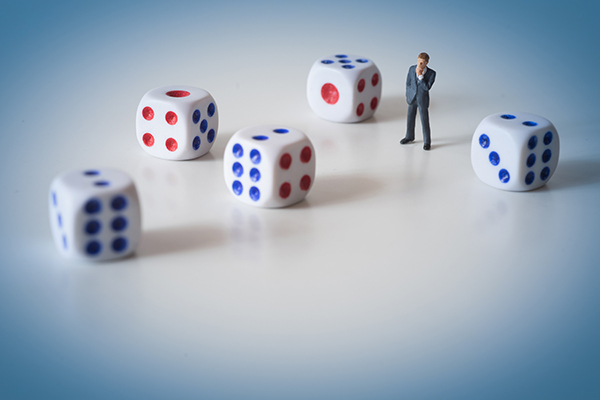
Probability calculations that can be used to inform decisions and manage risk can be very complicated. This unit is designed to help build your foundational understanding of probability and introduce you to some of the techniques that are used to calculate very difficult probabilities. You will continue to work with the Games Fair interactive tool and be exposed to real world situations to start to realize the impact of probability in your world.
The focus of this unit is on Probability Distributions. You will learn how to display all of the outcomes of a probability situation in a table and a bar graph. You will learn some formulas that will work with some situations. A large part of the unit will be calculating the expected value, or average, of a probability situation. The Games Fair Interactive tool will be used throughout the unit and will provide a focus for the summative and lead up to the Culminating Assignment, the Games Fair.
Probability calculations that can be used to inform decisions and manage risk can be very complicated. This unit is designed to help build your foundational understanding of probability and introduce you to some of the techniques that are used to calculate very difficult probabilities. You will continue to work with the Games Fair interactive tool and be exposed to real world situations to start to realize the impact of probability in your world.
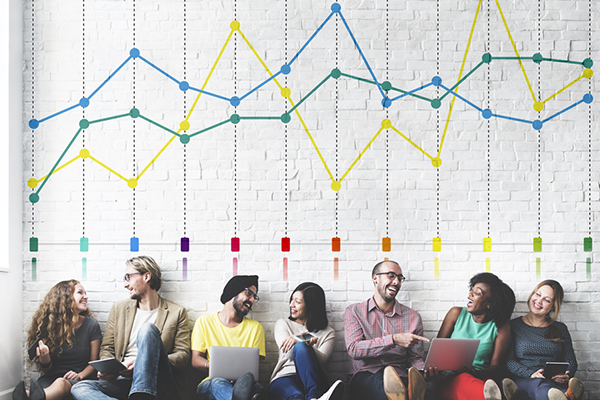
After much work to collect valid and reliable information in the form of statistics, you will learn to analyse the statistics to make conclusions that can help make decisions. You will explore one real and two variables statistics using the World Map Interactive tool. A data set used will include a perceived quality of Health Care across Canada. The unit summative will be require you to act as a consultant for a large Canadian franchise to help them make a decision.

In Unit 3 of this course, you demonstrated how to represent the distribution of a discrete random variable. This unit will look at the distribution of continuous random variables and how they are compared to discrete variables. In the third and fourth activity, you will be introduced to what may be the most important mathematical function: the normal distribution.
In this unit, you will consolidate the concepts and skills you have learned throughout this course. You will complete the course culminating activity, through which you will analyze the impacts of energy transformation technologies on society and the environment.