As Leo smiled—a full, symmetrical smile that reached his eyes—Elena realized that the technology wasn't just about "Techniques" or "Bio-ink." It was about restoring the human story that illness had tried to interrupt.
Six weeks later, the surgery took place. Elena held the printed graft in her hand—it felt remarkably like real bone, yet it was custom-fitted to the millimeter.
For decades, reconstructive surgery relied on "harvesting"—taking bone from a patient’s hip or fibula to patch a hole elsewhere. It was a brutal trade-off: fixing one site by damaging another. But Leo’s case was different. Using high-resolution , Elena had created a perfect digital 3D model of his missing mandible.
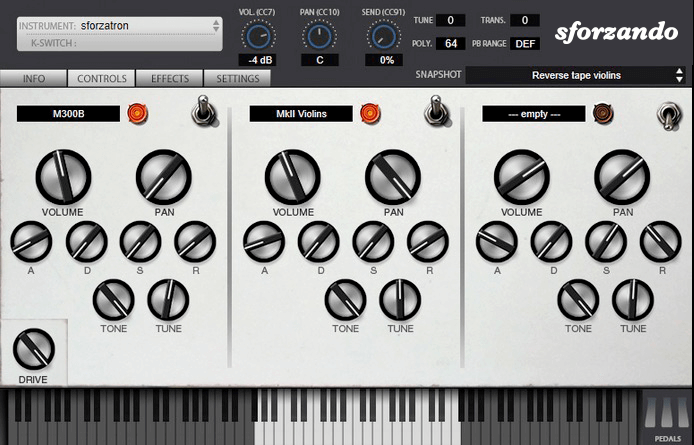
The SFZ Format is widely accepted as the open standard to define the behavior of a musical instrument from a bare set of sound recordings. Being a royalty-free format, any developer can create, use and distribute SFZ files and players for either free or commercial purposes. So when looking for flexibility and portability, SFZ is the obvious choice. That’s why it’s the default instrument file format used in the ARIA Engine.
OEM developers and sample providers are offering a range of commercial and free sound banks dedicated to sforzando. Go check them out! And watch that space often, there’s always more to come! You are a developer and want to make a product for sforzando? Contact us! 3D Bioprinting for Reconstructive Surgery:Techn...
You can also drop SF2, DLS and acidized WAV files directly on the interface, and they will automatically get converted to SFZ 2.0, which you can then edit and tweak to your liking!
Download for freeInstrument BanksSupport
As Leo smiled—a full, symmetrical smile that reached his eyes—Elena realized that the technology wasn't just about "Techniques" or "Bio-ink." It was about restoring the human story that illness had tried to interrupt.
Six weeks later, the surgery took place. Elena held the printed graft in her hand—it felt remarkably like real bone, yet it was custom-fitted to the millimeter.
For decades, reconstructive surgery relied on "harvesting"—taking bone from a patient’s hip or fibula to patch a hole elsewhere. It was a brutal trade-off: fixing one site by damaging another. But Leo’s case was different. Using high-resolution , Elena had created a perfect digital 3D model of his missing mandible.